zondag 29 april 2012

Living up to their good luck: Rare Philippine turtles smuggled to Hong Kong returned to Manila

The original article can be found here

MANILA, Philippines — Turtles represent longevity and good luck, and that’s certainly true for 18 rare smuggled turtles that were returned from Hong Kong to their native Philippines.
Philippine Wildlife Bureau head Mundita Lim says the pond turtles were confiscated at the Hong Kong airport in February from a Chinese student, along with 13 more common box turtles.


Pond turtles (Siebenrockiella leytensis) live only in forests on Palawan Island southwest of Manila. Only about 120 remain in the wild. Lim says they are prized as novelty pets or food.
Philippine officials took the unprecedented step of traveling to Hong Kong and retrieving the turtles because they are so rare. Palawan’s governor received the turtles at the Manila airport Friday.
The 18 will be rehabilitated before being released in the wild.


Chambal sanctuary a killing field for gharials

The original article can be found here


KANPUR: Illegal fishing in the National Chambal Sanctuary is killing endangered gharials like the one found dead in the Chambal river in Etawah on Thursday last. The tragedy continues unabated despite the fact that now there are very few gharials left in the region.

The gharials (Gavialis gangeticus) have been declared as a 'critically endangered specie' by the International Union For Conservation of Nature. The National Chambal Sanctuary, which falls in UP as well as Rajasthan and Madhya Pradesh, is a known as a habitat for the endangered gharial and other aquatic animals. It is spread in an area of 5,000 sq km.

Experts say illegal fishing, using boat and synthetic net, is posing a serious threat to the endangered gharials nesting in the sanctuary. Only on Monday, a 16-ft-long gharial was found hacked into pieces at Lal Pura Khar in Bhareh area of Etawah and on Monday a boat and a large synthetic fishing net was seized by the forest department personnel of the National Chambal Sanctuary.

Such illegal practices are still on despite a ban on fishing by authorities in the sanctuary to ensure the safety of the aquatic animals. There is an urgent need to check the rampant killing of gharials and other rare aquatic animals, including dolphins and turtles and to strictly enforce the ban. Nesting of the endangered gharial have recently been sighted along the Chambal river, at present, there incubation period is underway and hatching of egg is expected to take place in the last week of May or first week of June, the National Chambal officials said.

"The female gharial lays 30 to 40 eggs in each nesting site. These eggs are incubated and hatched due to sand's heat. Then the baby gharials emerge from their eggs and creep into the river," the expert informed.

"Areas known for the notoriety of hunters start from Panchnada to Bansuri, which is nearly a 15 km of stretch, then from Siddhbaba temple upto Pali, a 6km spread of land downstream, besides from Barchauli to Kasauwa, Ranipurwa to Lakhanpurwa and from Gati to Kheda," said a forest department official. 


Most of these reptiles are victims of by-catch in fishing nets. Sand-mining also poses one of the most significant threats to gharials, Gangetic dolphins and turtles in the Chambal sanctuary. "What is more shocking is that these endangered aquatic species are being killed by fish poachers as these reptiles become victim of by-catch. Sand-mining is other illegal practice within the sanctuary, but there is no one to check those involved in the illegal trade," says Rajiv Chauhan, secretary, Society for Conservation of Nature.

He further informed that earlier there was a guard especially employed for guarding gharials in the region but the post has been lying vacant since the past eight-nine years following retirement of the previous staff.

Fishermen are active both in the upstream (Madhya Pradesh) and downstream in (Uttar Pradesh).

Another wildlife enthusiast claimed that big contractors are in cahoots with local fishermen and use them for fishing. "Such contractors are least bothered about the welfare of the environment and are using every possible means available to earn quick money," he said.

"This is a big problem and there's a lot of manpower needed to trap these illegal fishers. However, we will leave no stone unturn to check the illegal fishing practice to save endangered species," says Uma Shanker Dohre, Wild Life warden, while talking to TOI.

In 2007, from November till March 2008, more than 112 gharials died in the Chambal due to unknown reasons. Further investigations by the IVRI suggested the possibility of poisoning by metal pollutants. Just 200-300 gharials are believed to be left in the Chambal and Katarnia Ghat. All over India, there are 2,000-3,000 gharials left. 

Limbless amphibian species found

The original article can be found here


A UK-Indian team of scientists have announced the discovery of a new species of limbless amphibian.
The animal was identified by accident in the Western Ghats area in the state of Kerala, South India.
The specimens were found inside moist soil after digging the shrub-covered bank of a mountain stream.
The creature - about 168mm in length and pink in colour - belongs to an enigmatic, limbless group of amphibians known as the caecilians.
Ramachandran Kotharambath, lead author of the report, told the BBC Tamil Service that the animal was identified as a new species following extensive comparisons with other, similar examples from this amphibian group.
According to the researchers, specimens of the novel caecilian - named Gegeneophis primus - were collected during field works in two consecutive monsoons, first in October 2010 and then in August 2011.

The caecilians are an enigmatic group of limbless amphibians


They were discovered at a valley on a plantation in the Wynad district of Kerala.
Active collaboration The new finding was made as part of a longstanding research collaboration between the department of zoology at the University of Kerala and London's Natural History Museum. The Central University at Kasargod in Kerala also contributed to of the discovery.
The finding has been reported in the latest edition of the academic journal Zootaxa.

The wider distribution, natural history and habitat preferences of the species are yet to be determined.
The discovery of this species indicates that the caecilian amphibians might have great diversity all along the Western Ghats area said Mr Ramachandran.
"The discovery on a plantation points out that these elusive animals are very vulnerable to anthropogenic activities and are living silently right under our feet," he explained
The new species do not face any immediate threat as long as the habitat structure is maintained, according to the scientists.
They also say that they need to know how far and wide this species is distributed and what are the habitat requirements.
Though these tiny amphibians are at least safe now, any major modification in the plantation structure could dangerously affect the species survival, said Mr Ramachandran
Co-author Dr Oommen says the discovery was significant since the finding ended a hiatus of almost half-a-century. "It highlights the fact that the knowledge of caecilian amphibians of the Western Ghats remains incomplete and in need of further study."

More about these animals

dinsdag 24 april 2012

HORRIBLE!!!!!!

RATTLESNAKE TORTURED for Photo Opportunity in Apache

This rattlesnake was tortured for photo opportunities in Apache, Oklahoma. They freeze the snakes (which starts the crystallization of their blood) and then sew their mouths shut. Snakes are then used like props for photos and are left baking in the hot sun all weekend long. Snakes feel pain and suffer just like any other living being does.
Rattlesnake roundups & felony animal cruelty are OK in Oklahoma? THIS weekend in Waurika & Waynoka, Oklahoma they will hold their annual rattlesnake roundups. Waurika is one of the towns where they have sewn snake mouths shut & put them on display. To help put an end to rattlesnake roundups and to learn more about them please visit these sites and share this with others...


People who do this should be put in a freezer for three days...


donderdag 19 april 2012

A turtle baby boom

The original article can be found here


Green Turtle nesting boom in Philippines

2012
A turtle baby boom on the Baguan Island of Turtle Islands in the Philippines has produced a record 1.4 million eggs according to Conservation International (CI) Philippines citing figures from the Department of Environment and Resources (DENR).
In 2011, a total of 14,220 Green Turtle (Chelonia mydas) nests were counted on Baguan Island, the highest number since recording at the site began in 1984. This adds up to over 1.44 million eggs which will provide a huge boost to the population of the Green Turtle which is listed as Endangered on the IUCN Red List of Threatened Species™.
 
“1.44 million green turtle eggs in one year is an astounding number for a nesting beach that’s only a little over one kilometer in length. This definitely presents great hope for boosting green turtle populations,” said Romeo Trono, CI Philippines Country Executive Director and IUCN SSC Marine Turtle Specialist Group Member. “With an average of 90% hatching success and 1% survival rate up to sexual maturity, Baguan in 2011 alone could contribute up to 13,000 to the adult turtle population.”
Baguan is one of the nine islands in the Turtle Islands Heritage Protected area (TIHPA), a protected area which is jointly managed by two countries; Malaysia and the Philippines. Baguan is one of six islands in the Philippines’ Turtle Islands Wildlife Sanctaury and there are three islands located in Malaysia’s Sabah Turtle Islands Park (TIP).

The nesting success has been attributed to the combined conservation efforts of CI Philippines, DENR, local government and the Malaysian park management authority Sabah Parks. A protection area was set up around Baguan and law enforcement to prevent poaching, egg collection and habitat destruction was strengthened by training park wardens, law enforcers and community volunteers. Patrolling efforts were also increased and the enforcements team included officers from the Philippine Coast Guard and Philippine Navy Marines.
“Bold protection measures such as the establishment of Baguan no-take zone and the complete protection status of the Turtle Islands Park in Sabah have been instrumental in ensuring a safe haven for turtles while other beaches in the region were being lost to coastal development,” says Dr. Nicolas Pilcher, director of Sabah-based Marine Research Foundation and Co-Chair of the
International Union for Conservation of the Nature Marine Turtle Specialist Group.
Dr Nicolas Pilcher and Romeo Trono, who are both members of the IUCN SSC Marine Turtles Specialist Group, along with Dr. Mundita Lim and Renato Cruz at DENR, Joel Palma at WWF Philippines and Paul Basintal at Sabah Parks, who are all also members of the IUCN SSC Marine Turtles Specialist Group, have been leading turtle conservation projects in Malaysia and the Philippines for over 20 years. They have worked closely to link government agencies and NGOs and have developed a joint network of protected areas to safeguard turtles at all stages of their life cycles. Records kept by DENR show there are more Green Turtle nests on Baguan when the area is protected proving that conservation action and protection can work.
“The hatchlings that emerge from the Turtle Islands still face great risks throughout their lives as they journey through the ocean,” added Romeo Trono, “but at least here in the Turtle Islands, we are determined to provide them with a good start.”


Related links:


International Union for Conservation of Nature Marine Turtle Specialist Group.

Frogs at front of germ warfare


A TINY frog that lives in the rainforests of North Queensland could provide humans with a cure for deadly bacterial diseases. 

Nuclear scientists are searching for ways to fight antibiotic-resistant bacteria such as golden staph, which kills thousands of hospital patients each year.
They have found chemicals secreted from the skin of two amphibians, the Australian green-eyed tree frog and the growling grass frog, can form a defence to the bacteria.
The cutting-edge research is being carried out at the Australian Nuclear Science and Technology Organisation's nuclear reactor at Lucas Heights in Sydney.
Melbourne University Professor Frances Separovic, who is leading the project team, said they had characterised several small proteins - known as peptides - from the skin glands of the frogs, which had been found to host defence compounds with strong antibacterial activity.
The peptides work by attacking the membranes of unwanted bacteria found on the frogs' skin, killing them before they can present a danger to the frog.
HOPE: Researchers hope frogs can help
unlock a cure for deadly bacterial diseases.
Litoria genimaculata

"By understanding their 3D structure and mechanism of action at the molecular level, we may be able to increase their antibiotic potency or antimicrobial potency and specificity," Prof Separovic said.
The nuclear reactor is being used to analyse, on a molecular level, how and why peptides from the frog skin secretions work, and how well they can kill bacterial cells.
"Given that we don't want them to attack healthy human or frog cells, we also need to establish whether and how these antimicrobial peptides are selective for bacterial cells," Prof Separovic said.
It is hope the research will be completed by the end of the year, providing a blueprint for scientists to develop new drugs that can combat antibiotic-resistant bacteria.
The two frog species have been selected for the project, as the skin secretions from the animals are known to protect the frogs against a broad range of bacteria.
The green-eyed tree frog, also known as the tapping green-eyed frog, lives in rainforests in North Queensland, often found near rocky creeks.
The species gets its name from the brilliant green colour over the brow of each eye. The frog grows to about 7cm long. It has adapted its appearance to blend in with the moss-covered forests, with most having a brownish-green body with rust-coloured blotches that match the lichen-covered rocks of the creeks and streams of its habitat.

zondag 15 april 2012

Despite Deadly Fungus, Frog Imports Continue


A clerk serving Cantonese-speaking customers at a cluttered market in San Francisco’s Chinatown reached into a tub of American bullfrogs. She drew a one-pound frog from the top of the pile. She whacked its head, sliced its neck and placed its body in a plastic grocery bag.
The frog cost about $4. If it was sautéed, stir-fried or cooked in a clay pot and served with rice and vegetables, it could provide enough poultry-flavored white meat for a meal for at least two people.
Tests on the bullfrog by Raul Figueroa, a researcher at San Francisco State University, confirmed that it was infected with an invisible but virulent fungus. The chytrid skin fungus Batrachochytrium dendrobatidis, or B.d., is harmless to humans but may have wiped out hundreds of amphibian species. Two other bullfrogs that The Bay Citizen bought from other Chinatown markets also tested positive.
The disease appears to affect only amphibians, and some species are immune to its effects while others succumb rapidly. It causes the amphibians’ skin to thicken and leads to cardiac arrest.
American bullfrogs are native to eastern North America but are reared in factory farms around the world. Two million bullfrogs are imported into the Bay Area every year, according to federal import records, and millions more are shipped to other major cities.
Scientists and conservationists fear that the global trade could lead to the extinction of countless species of frogs and salamanders. Amphibians play subtle but substantial roles in California’s ecosystem, eating insects and feeding wildlife.
American bullfrogs are an invasive species in California. State law requires markets to kill the bullfrogs when they are sold, although pet stores are allowed to sell them alive. Yet the bullfrogs make their way into rivers and lakes, where they spread the disease and devour everything from native tadpoles to ducklings.
Some of the bullfrogs that are free in the Bay Area are former pets. Buddhists may have released others during traditional ceremonies that liberate living creatures. Once in the environment, the frogs can reproduce.
Efforts to ban the live bullfrog imports have been strenuously opposed by Chinese-American leaders who defend their communities’ rights to a traditional part of their diet.
A study of 493 fresh-bought frogs from San Francisco, Los Angeles and New York found that 62 percent were infected with the chytrid fungus.
“We don’t know if the bullfrogs contributed to the introduction of B.d. into the U.S.,” said Lisa M. Schloegel, a disease ecologist and lead author of the study, which was published in the journal Biological Conservation in 2009. “But the bullfrogs are a constant source of infection.”
Vance T. Vredenburg, a biology professor at San Francisco State University who specializes in amphibians. said he had seen “literally hundreds, and tens of thousands” of dead animals on the shorelines of lakes. “With this fungus pathogen, we have something the world has never seen before,” he said. “It’s jumping from species to species to species, and we have very little predictability about what species it’s going to have an effect on.”
American bullfrogs survive the pathogen but can transfer the fungus spores to other, less fortunate species. The fungus has torn through the Sierra Nevada, leaving the once-abundant mountain yellow-legged frogs on the brink of extinction. 

Adithya Sambamurthy/The Bay Citizen
More than half the frogs imported into San Francisco
every year carry the chytrid skin fungus.

Proposals to ban the live imports into California were initially pushed forward by conservationists and animal rights groups in the mid-1990s. A few years later, scientists perplexed by worldwide amphibian deaths discovered B.d.
Assemblyman Paul Fong, Democrat of Cupertino, who championed a bill last year that outlawed the sale of shark fins, opposes a ban on live frog imports. So does Senator Leland Yee, Democrat of San Francisco.
“It’s a food stock that many Chinese-Americans rely on,” Mr. Yee said.
Pius Lee, chairman of the Chinatown Neighborhood Association in San Francisco, said he warned Buddhists that “pro-animal groups are watching you” and suggested they free animals from containers without releasing them into the wild.
But Kerry Kriger, an ecologist who founded the Santa Cruz-based nonprofit Save the Frogs after studying B.d. in Australia, said regulations were needed.
“People set them free on purpose. They escape, and the water they’re held in has chytrid in it — and that gets flushed out into the environment,” Dr. Kriger said. “You can ship in as much chytrid fungus into the United States as you want right now, and that’s what people do with the bullfrogs.”
jupton@baycitizen.org

vrijdag 23 maart 2012

Sibling is not such a load of croc

The original article can be found here

Kelly Ryan, From: Herald Sun March 24, 2012 

CRANKY croc Charlie wants much smaller sibling Peter Pan off his back. Brotherly rivalry is alive in the reptile world and a pesky loved one can quickly become just another snack. 

The freshwater crocodiles were born from the same clutch of eggs five years ago. But an extremely rare genetic condition has kept Peter Pan a miniature version of his more fearsome family members, with Charlie at least five times bigger, heavier and hungrier.
Owner Scott D'Agostino says his little pet doesn't know he's a tiny version of the larger deadlier predators and has a feisty bite to prove it. He even has his own Facebook site.

FRESHWATER CROCS CHARLIE AND PETER PAN WERE BORN FIVE YEARS AGO BUT, DUE TO A GENETIC CONDITION, CHARLIE IS NOW ABOUT THREE TIMES LARGER THAN HIS SIBLING. Herald Sun


"He eats the same food, is healthy and happy but just hasn't grown up at all," he said. "He was named after Peter Pan from the story of the boy who never grew up."
The scaly pair will join the police dog squad and amazing animal survivors at a huge open day at Melbourne University's Veterinary Hospital at Werribee tomorrow.
The specialist animal hospital treats about 17,000 pets a year.
Vets will join pets to teach people how to read animal body language and provide career advice to students keen to work with our four-legged or feathered friends.
The day will feature demonstrations on health and nutrition, dog obedience, horse health and fascinating reptiles.
Melbourne Cup winners Doriemus and Brew are guests of honour. The open day will be held from 10am-3pm at the hospital, 250 Princes Freeway, Werribee.

Should the location of newly discovered species be hidden?

The original article can be found here


Discovering a new species can be the defining moment of a biologist's career, but for some it can also mean exposing rare and vulnerable animals to the dark world of the wildlife pet trade, with catastrophic results.
It's a scientific dilemma that has led some conservationists to question whether it would be better to hide their findings from the world.
In 1999, herpetologist Bryan Stuart was working in Northern Laos when he stumbled across an eye-catching newt he had never seen before.
The creature was prehistoric in its appearance with thick, warty skin and bright, yellow dots all the way down its back.
He spotted it in a bottle of alcohol that a Lao colleague had brought back from a wedding in a remote part of the country - the poison from the newt's skin had been used to make a drink with special medicinal properties for a toast to the newlyweds.
Stuart went in search of the newt in the wild and three years later he published an article in the Journal of Herpetology, announcing the discovery of the new species, Laotriton laoensis.
"When you see one of these animals in the wild in your hand for the first time and you recognise that it is absolutely unique, it's like discovering a treasure," he says.

But his joy turned to horror when he realised his discovery had caught the attention of amphibian dealers around the world. Examples of the species were popping up in pictures on amphibian pet forums as far away as Germany and Japan.
Stuart soon realised that trading networks had emerged between Laos and the West and traders were using his report as a roadmap to capture and sell hordes of the newts.
"The mindset of these commercial collectors is to go in, get as many as you can, as quickly as you can, to make as much money as possible," he says.
"What's worse is they have set up these trade networks with local villagers telling them to collect as many as they can."
Smugglers sold Laotriton laoensis newts
for $200 each

The Lao newt lives on the surface of rock pools and was easy to find. Villagers were typically offered less than $1 (£0.63) for each newt. Smugglers then sold them on to hobbyists for as much as $200 (£130).
Because the newt is unique to Laos and only found in three small areas in the north of the country, the population was quickly decimated.
In 2008, six years after the publication of Stuart's paper, a biologist from the National University of Laos, Somphouthone Phimmachak, proved the species was close to extinction. Her work led to the Lao newt being granted official status as a threatened species, making it illegal to trade specimens caught in the wild.

It wasn't the first time a scientific discovery has put a rare species in danger.
"A turtle from the small Indonesian island of Roti was so heavily hunted that today it is nearly extinct in the wild," says Stuart. A rare gecko from south-east China was removed from its natural habitat entirely by smugglers who got prices as high as $2,000 (£1,272) for each.
Jason Lee Brown, a herpetologist who has studied poison frogs in Peru since 2003, describes three separate incidents where his discoveries put a species' existence under threat.
In 2006 he published the picture of a new species of poison frog, Ranitomeya benedicta on the internet. Almost immediately it appeared in trade shows in Europe and North America.
Two years later it happened again when he published the description of a second new species and again when he reported the rediscovery of a third species thought to be extinct.
In 2010 Brown returned to the area in Peru where he had initially discovered R. benedicta and found that locals had been cutting down canopies in the trees where the frogs were known to live.
"I almost quit what I was doing," he says.
Two of these frogs were declared threatened last year.
Endangered species status is meted out by the International Union for Conservation of Nature (IUCN), according to the convention on trade in endangered species (Cites). It was first signed in 1973 and has now been ratified by 175 countries.
This illegal shipment of frogs were on their way to
Europe from Peru when they were found dead
But according to some conservationists, endangered species status creates new problems. Chris Shepherd of Traffic, an organisation that monitors the wildlife trade, believes the endangered label can boost animals' black market value.
He regularly visits the wildlife markets of Jatinegara in Jakarta and Chatuchak in Bangkok where he has seen traders advertising the fact - albeit slyly - that the animals they sell are endangered and illegal.
Traffic is working to train local law enforcement agencies to clamp down on illegal wildlife trade. But obliterating wildlife trade is low on the political agenda in countries such as Laos, Indonesia, Thailand and Peru.
"Customs have a very important role to play being at the front line of import and export," says Shepherd. "But finding a customs officer anywhere in the world that cares much about newts is difficult."

Why should we care about newts?

  • "Amphibians are the new canaries in the coal mines," says Ariadne Angulo of the IUCN
  • They are often the first species to respond to pollution or change in climate and are crucial in surveys of landscape health
  • A third of all known species of known amphibians are classified as threatened
  • Amphibians eat a lot of invertebrates and are an important source of food for larger predators
Source: Ariadne Angulo, IUCN


Relying on governments in developing countries to address the issue is pointless, agrees Jason Lee Brown, who got little help from the Peruvian authorities when he drew cases of frog smuggling to their attention.

"There is widespread apathy, they have so many issues to deal with that are more important and they just don't have the infrastructure to deal with this," he says.
He believes the responsibility lies with those in the developed world who are driving the pet market.
Peruvian hunters, many of whom live on $1.25 (£0.79) a day, can get about $2 (£1.30) a frog. Collectors in Europe and the US will pay up to $1,000 (£636) a pair, making smuggling a very lucrative business.
Some people believe the only viable solution to the trade of wild animals is captive breeding.
Mark Pepper, who has worked with Brown on frog conservation projects in Peru, runs a legal and ethical frog breeding business but sometimes he finds illegal traders selling species he has never worked with under his name.
He thinks smuggling is not the most pressing threat to amphibians. For some species, such as the Lao newt, smuggling can have a devastating effect, but most amphibians face the much greater threat of habitat destruction.
Timber felling and mining are a much greater risk to the frogs he has studied in Peru, he says.
"Smuggling is a drop in the bucket."
The logical thing it seems would be to keep the locations of the animals secret and some scientists do choose to do this.

Last year the New York Times reported that a herpetologist in Malaysia, Indraneil Das rediscovered a striking amphibian called the Borneo rainbow toad previously thought to be extinct. Das avoided publishing its specific location.
Similarly, after his experience with the Lao newt, Bryan Stuart discovered a species of poison snake and decided to keep its location secret. But it was something he was uncomfortable doing.
He believes that scientists need to share knowledge of which species occurs where so that they can co-operate with each other and the public to preserve the species and its habitat.


donderdag 22 maart 2012

Protection of one of the rarest turtles of the world

Slow and Steady
A Manhattan night-life barons's race to save an ancient species
Bij William Finnegan

One smuggler wore a trilby, white with a black band. Another looked like Little Richard. The third was the most worrisome. He had heavy shoulders and a lidless, unsmiling gaze...


Eric Goode with a plowshare tortoise at
Ankarafantsika National Park, in Ampijoroa, Madagascar.


Read more here...

https://turtleconservancy.org/documents/2012/2/The%20New%20Yorker.pdf

And here...

http://www.newyorker.com/online/blogs/photobooth/2012/01/plowshare-tortoise.html


Sea turtles protection


Court Upholds Limits on Sea Turtle Deaths in Hawaii's Longline Fishery
HONOLULU, Hawaii, March 16, 2012 (ENS) - In a decision Thursday, the Ninth Circuit Court of Appeals has upheld a federal district court settlement limiting the number of loggerhead and critically endangered leatherback sea turtles that can be caught by Hawaii's longline swordfish fishery.
The settlement responded to a lawsuit brought by conservation groups Turtle Island Restoration Network, Center for Biological Diversity and KAHEA challenging the National Marine Fisheries Service's decision in 2009 to nearly triple the number of sea turtles the fishery could catch.
he settlement rolled back the limit to prior levels. Today's decision rejected an appeal by the fishing industry, which sought to invalidate the agreement.
Earthjustice attorney Paul Achitoff said, "We're glad the federal appeals court upheld the temporary sea turtle protections we won with the consent decree, but the high level of sea turtle harm NMFS is now proposing may well be worse than the previous rule. NMFS seems to be raising the limits to accommodate the longliners rather than to ensure that the species aren't driven to extinction, as the law requires."
Swordfish longline vessels trail up to 60 miles of fishing line suspended in the water with floats, with as many as 1,000 baited hooks deployed at regular intervals. Sea turtles become hooked while trying to take bait or become entangled while swimming through the nearly invisible lines.
These encounters can drown the turtles or leave them with serious injuries. Sea birds such as albatross dive for the bait and become hooked; marine mammals, including endangered humpback whales and false killer whales, also sometimes become hooked when they swim through the floating lines.
Sea turtle swims in waters south of Kona
on the west coast of the Big Island, Hawaii. (Photo by K. Johannson)
"Hawaii's public-trust ocean resources have to be better managed for our collective best interest, and not just the interests of this commercial fishery," said KAHEA Board President Kealoha Pisciotta. "The 9th Circuit decision is a victory not just for the turtles, but for Hawaii's people who rely on a healthy, functioning ocean ecosystem. We can't rest as long as federal fishery managers continue to allow unacceptable levels of harm to the few sea turtles remaining in the ocean."
Turtle Island Restoration Network, Center for Biological Diversity and KAHEA sued the National Marine Fisheries Service over its decision to increase, from 17 to 46, the number of loggerhead sea turtles the fishery could catch in a year before being required to shut down.
At the same time, NMFS was considering increasing protections for loggerheads under the Endangered Species Act by upgrading it from "threatened" to "endangered."
The plaintiffs and NMFS agreed to settle the case by rolling back the number of loggerheads allowed to be caught to 17 while the agency decided whether to uplist the species and prepared a new analysis of the effects of increasing the turtle catch limit on the species' survival and eventual recovery.
Judge David Ezra approved the settlement as a consent decree.
In its appeal, the fishing industry argued that the court lacked the power to issue the consent decree. The appeals court rejected this argument, noting that the consent decree simply offered the sea turtles some protection by reinstating the previous catch limit, while allowing the agency an opportunity to reconsider its position in light of the latest scientific information.
"Our settlement ensures that sea turtles can swim more freely and safely in Hawaii's waters," said Miyoko Sakashita, oceans director at the Center for Biological Diversity. "If loggerheads and leatherbacks are going to survive, we need to stop killing them in our fisheries."
While the appeal was pending, NMFS in September 2011 changed the loggerheads' designation to "endangered." In January of this year, the agency also issued a new biological opinion as contemplated by the consent decree. That document proposes to increase the number of endangered loggerhead sea turtles the longliners can catch from 17 to 34. It also increases the limit for catching endangered leatherback sea turtles from 16 to 26. Notably, in 2011 the fishery was forced to close after it caught its limit of leatherbacks.
Teri Shore of the Turtle Island Restoration Network said, "Sea turtles are becoming more endangered, not less, so each one we lose in the longline fishery pushes them closer to extinction. Allowing more sea turtles to be harmed in this high-bycatch fishery makes a joke out of so-called sustainable seafood."


10K acres set aside for threatened frog


Areas near Rosemont not included due to absence of breeding.
Tony Davis Arizona Daily Star | Posted: Wednesday, March 21, 2012


The federal government will designate more than 10,000 acres in Arizona and New Mexico as prime habitat for the threatened Chiricahua leopard frog.
More than a dozen streams and many livestock watering tanks across Southern and Central Arizona were picked by the U.S. Fish and Wildlife Service as critical habitat for the frog, a threatened species.
The Las Cienegas National Conservation Area, Florida Canyon in the Santa Rita Mountains, Peña Blanca Lake near Nogales, Sycamore Canyon in the Atascosa Mountains and Ramsey and Brown canyons in the Huachuca Mountains are among the critical habitat sites.
But other areas near the proposed Rosemont Mine site in the Santa Ritas that have had leopard frogs were left out because the frogs aren't known to breed there now - largely because there's less water there than there was several decades ago.
The decision means one less legal issue for the mine, since lands designated critical habitat can't be destroyed or seriously modified by projects that need U.S. permits.
Last year, mine opponents with the Center for Biological Diversity and Pima County recommended six livestock watering tank sites on Forest Service and private land in the mine area as prime frog habitat. The Wildlife Service rejected them in its decision this week and chose six other tanks farther away, within two or three miles of the mine site. In recent years, such tanks have become key areas for the leopard frog.
COURTESY OF DENNIS CALDWELL This Chiricahua leopard frog was photographed on the east slope of the Santa Rita Mountains, within the newly designated leopard frog habitat.

Mary Richardson, a wildlife service supervisory biologist, said the agency determined the Rosemont sites didn't meet critical habitat criteria. First, there is no indication that frogs breed there. Leopard frogs can travel as far as five miles, spending time in one area and breeding in another.
Frog researchers Philip Rosen, of the University of Arizona, and Dennis Caldwell, a private researcher, said the Rosemont-area sites are worth protecting, and that breeding could be restored there. But they agreed that the areas don't meet the feds' critical-habitat standards without breeding populations.
Michael Robinson of the Center for Biological Diversity said that overall, the group is pleased by the habitat decision. But it was disappointed that the Rosemont-area tanks weren't picked.
Robinson said the mine could obliterate frogs on its land and could destroy their ability to survive nearby due to dust, toxic chemicals, blasting sounds and truck traffic.
Julia Fonseca, Pima County's environmental planning manager, wrote the Wildlife Service in 2011 that leopard frogs were reported as "abundant" in the Rosemont area in the 1970s by private biologists. While the surveyors didn't note whether they were Chiricahua or lowland leopard frogs, the Arizona Game and Fish Department concluded in the 1990s they were Chiricahua frogs.
Bijschrift toevoegen
Surveys by Rosemont Copper consulting firm Westland Resources found those frogs in the six Rosemont-area water tank sites in a 2008 survey, but they weren't breeding.
Still, the frogs' presence throughout the Santa Ritas suggests the area contains a regional group of connected populations whose habitat needs protection, said Fonseca and Robinson.
Rosemont Copper official Kathy Arnold said based on the company's surveys for frogs and other species, the Wildlife Service findings met Rosemont's expectations.
"Rosemont works with Arizona Game and Fish, U.S. Fish and Wildlife Service, the University of Arizona and the U.S. Forest Service, as do other ranches and property owners in the area," Arnold, Rosemont's vice president for environmental and regulatory affairs, added in a written statement.
"Contributions besides the survey work include providing water to habitat during dry periods, assisting with stormwater controls to control sediments entering ponds, and managing and providing access to habitat," she said.
Contact reporter Tony Davis at tdavis@azstarnet.com or 806-7746.

More about this frog and its protection:  Click here


zondag 4 maart 2012

Living keyrings


Living sea creatures are being captured and sold as keyrings! This is disgusting and should not be allowed!!

Live fish and small turtles sealed in plastic keychains have become increasingly popular items sold at subway entrances and train stations across China.


The living keychains containing  Brazilian turtles or king fish swimming in colored water are considered good-luck charms by many Chinese, but animal protection groups are outraged and call them a perfect example of “pure animal abuse”. Business is booming according to Chinese online newspaper Global Times, which reports one fish and nine turtle rings have been sold in just five minutes, on Tuesday, at the Sihui subway station, in Beijing.
According to vendors, the colored water in the 7-centimeter-long keychains contains nutrients that allow fish and turtles to live inside for months. While that may be true, Mary Peng, cofounder of the International Center for Veterinary Services, says they couldn’t survive in the sealed bag for very long, due to lack of oxygen.


While animal rights activists are protesting loudly against the sale of living keychains, there isn’t much else they can do, because China only has a Wild Animal Protection Law – if the animals are not wild animals they fall outside the law’s scope. Until the law changes to protect all kinds of animals, activists can only appeal to people not to buy them, and hope the market will die due to lack of customers.
Although some people buy these bizarre keychains to carry around for good-luck, there are those who buy them just to free the poor creatures from their tiny plastic cage.


vrijdag 17 februari 2012

'Horror frog' breaks own bones to produce claws


"Amphibian horror" isn't a movie genre, but on this evidence perhaps it should be. Harvard biologists have described a bizarre, hairy frog with cat-like extendable claws.
Trichobatrachus robustus actively breaks its own bones to produce claws that puncture their way out of the frog's toe pads, probably when it is threatened.
David Blackburn and colleagues at Harvard University's Museum of Comparative Zoology, think the gruesome behaviour is a defence mechanism.
The researchers say there are salamanders that force their ribs through their skin to produce protective barbs on demand, but nothing quite like this mechanism has been seen before.
The feature is also found in nine of the 11 frogs belonging to the Astylosternus genus, most of which live in Cameroon.


Male Hairy Frogs grow threads of vascularised skin during mating season
(Image: Gustavocarra / Creative Commons License)

Instant weapon

"Some other frogs have bony spines that project from their wrist, but in those species it appears that the bones grow through the skin rather than pierce it when needed for defence," says Blackburn.
At rest, the claws of T. robustus, found on the hind feet only, are nestled inside a mass of connective tissue. A chunk of collagen forms a bond between the claw's sharp point and a small piece of bone at the tip of the frog's toe.

The other end of the claw is connected to a muscle. Blackburn and his colleagues believe that when the animal is attacked, it contracts this muscle, which pulls the claw downwards. The sharp point then breaks away from the bony tip and cuts through the toe pad, emerging on the underside.


The claw breaks away from a small piece of bone (see arrow) at the tip of the frog's toe
(Image: Blackburn)


Hirsute horror

The end result may look like a cat's claw, but the breaking and cutting mechanism is very different and unique among vertebrates. Also unique is the fact that the claw is just bone and does not have an outer coating of keratin like other claws do.
Because Blackburn has only studied dead specimens, he says he does not know what happens when the claw retracts - or even how it retracts. It does not appear to have a muscle to pull it back inside so the team think it may passively slide back into the toe pad when its muscle relaxes.
"Being amphibians, it would not be surprising if some parts of the wound heal and the tissue is regenerated," says Blackburn.
Males of the species, which grows to about 11 centimetres, also produce long hair-like strands of skin and arteries when they breed (see image). It is thought that the "hairs" allow them to take in more oxygen through their skin while they take care of their brood.


The sharp bony claws look like small barbs
(Image: Blackburn)


Spiky snack

In Cameroon, they are roasted and eaten. Hunters use long spears and machetes to kill the frogs, apparently to avoid being hurt by their claws.
"This is an incredible story," says Ian Stephen, curator of herpetology at the Zoological Society of London, UK. "Some frogs grow spines on their thumbs during breeding season, but this is entirely different."
"For me, it highlights the need for a lot more research on amphibians especially in light of the threat of mass extinctions," he adds.
The existence of frogs with erectile claws like cats was first described by Belgian zoologist George Boulenger in 1900 in frogs found in the French Congo, now the Republic of Congo.

woensdag 15 februari 2012

Smallest chamaeleon in the world


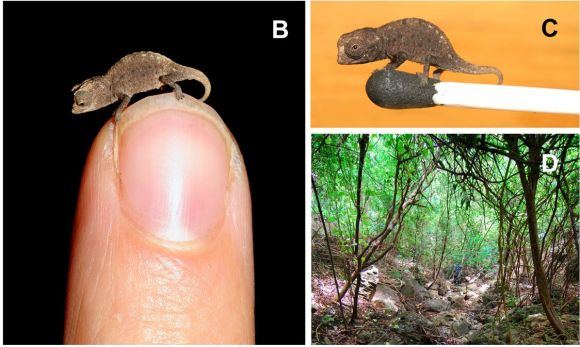
Scientists have discovered a new species of chameleon, Brookesia micra, believed to be the smallest in the world.

Brookesia micra chameleons live in the remote forests of Madagascar.
The juveniles are small enough to fit on the head of a match.
(Glaw, F., et al., PLoS ONE/Courtesy)
 
The tiny lizard, native to Madagascar, measures less than 30 millimeters fully grown – and when young, it is small enough to stand comfortably on the head of a match.
It was found by a team of German and American scientists, who described their discovery in the PLoS ONE journal.
The miniature chameleon lives on the forest floor by day and crawls into low branches to sleep at night, they say, which is when the researchers spotted it. Dr Frank Glaw of the Bavarian State Collection of Zoology, who led the expedition, told the BBC he and his colleagues scoured the forest at nightime during the wet season, using torches and headlamps to spot the rare lizards as they roosted.
They were seen only in one remote islet in Madagascar's uninhabited Nosy Hara archipelago, which the scientists suggest provide the explanation for their small size. In a phenomenon known as island dwarfism, species confined to islands commonly evolve into minature versions of their mainland cousins, according to Wired, possibly due to limited resources and pressure to reproduce faster.
The specifity of their habitat also means that the species is extremely vulnerable to extinction if the forests it lives in are threatened, Glaw warns.
Brookesia micra is one of four new species of chameleon they documented on their expedition to Madagascar, which according to The Local is home to nearly half of the world's 193 known species of the reptile.
The country is known for its many rare species of giants – including giant lemurs and tortoises – as well as dwarfs, such as the world's smallest primate, the mouse lemur, and some of the tiniest known frogs.
Brookesia micra, too, shares the island with the world's largest chameleons, which can grow to almost 70 centimeters long.

zondag 12 februari 2012

Puerto Rico killing iguanas to export meat


SAN JUAN, Puerto Rico — Iguanas of Puerto Rico: Your days are numbered.
The island's government is announcing plans to kill as many of the reptiles as possible and export their meat in hopes of eradicating an imported species that has long vexed residents and entertained tourists.
The U.S. Caribbean territory has roughly 4 million iguanas, which is a little more than the island's human population, according to Daniel Galan Kercado, secretary of the Department of Natural Resources.
"This is a very big problem. We have to attack it," he said in an interview Friday. "It has impacted structures, the economy, crops and the ecosystem."

An Iguana sits on the fourth hole of a golf course
in Puerto Rico, where roughly


Puerto Rico has long struggled to eradicate the bright green reptiles that can grow up to 6 feet (1.8 meters) long and have a life span of some 20 years. Iguanas are considered an endangered species throughout most of Latin America, but Puerto Rico is overrun with them, in part because they breed so quickly and have few natural predators.
The reptiles were first seen in the wild in Puerto Rico in the 1970s when owners began to release them, and their numbers have since exploded. They have been blamed for taking over airport runways, burrowing under buildings and destroying foundations, and causing blackouts by building nests near the warmth of electric plants.
Galan and other government officials, including Gov. Luis Fortuno, said killing the iguanas for export is a novel solution that economically benefits an island in its fifth year of recession.
Puerto Rico's Department of Health has approved letting Galan's agency finalize a plan to train volunteers to capture live iguanas and bring them to a processing center for slaughter and distribution to the U.S.
Demand for iguana meat is high in U.S. states with large populations of Latino and Asian immigrants, said Galan, who anticipates having the plan finalized by May. It would then have to be reviewed by several government agencies before it's approved.
Galan said numerous people have contacted his department to participate in the iguana roundup, although officials are still looking for a company that would help process and export the meat, which can be sold for up to $6 a pound.
"That is a lot more than chicken," he said. "It has great economic potential."
Fortuno said at a press conference this week that he supports the proposal.

maandag 30 januari 2012

Amphibian Lab is Coming

 
January 29, 2012
By
The Smithsonian Tropical Institute will open a new Summit Park Amphibian Rescue Center in Panama.
The laboratory’s mission is to prevent the extinction of a number of species including the endangered golden frog, Panama’s national animal. Since 1980 more than 120 species of amphibians have gone extinct, under assault from the rapidly spreading chytridiomycosis fungal infection.
The project has already begun inside temporary refrigerated amphibian rescue containers that will house rescued species from Eastern Panama.


zaterdag 28 januari 2012

Muhammad Nur Santosa: Killing cobras to make ends meet


Slamet Susanto, The Jakarta Post, BANTUL, YOGYAKARTA | Fri, 01/27/2012 11

They are scary and deadly. That’s what most people think when they become aware of the presence of a cobra. The snakes, known as ular sendok because the skin of their necks spreads like a spoon when they are about to attack, are indeed highly venomous.
For Muhammad Nur Santosa, 28, however, the poisonous reptiles are part of his daily life. If any cobras are found lurking in the yard of his Yogyakarta home, the father hurriedly captures them, for the animals are his source of income.

Almost every day, Nur Santosa butchers between 10 and 300 cobras to meet orders. The snakes are used for their skin, meat, gallbladders and marrow, which are in high demand for their supposed healing effects.


Muhammad Nur Santosa: JP/Slamet Susanto

“Sometimes I butcher 300 cobras a day and at other times none. Since November of 2011, I’ve slaughtered nearly 9,000 snakes,” Nur Santosa said. He keeps the reptiles, mostly supplied by hunters from various parts of Java, in cloth sacks.

Nur Santosa’s method of butchering snakes is bold and rather dangerous. With his bare hands, the man pulls cobras out of their sacks one by one, decapitating them with a pethel (adze). “I just do it carefully, observing the movement of their heads. I’m not immune to cobra venom,” he told The Jakarta Post at his slaughterhouse in Sudimoro in Bangunharjo village, Bantul.

After killing the cobras, Nur Santosa, with the help of his older brother, Wisnu Susilo, removes the skin and extracts the gallbladders. Nur’s mother, Sudiyah, removes the marrow from the bones.

Cobra meat is purchased by restaurants that serve snake meat like Burger Cobra in Lempuyangan, Yogyakarta, at prices ranging from Rp 15,000 (US$1.65) to Rp 30,000 per kilogram. The marrow and gallbladders, believed to have therapeutic effects, are sold together at Rp 25,000. Some customers even consume them right at Nur Santosa’s home.
“I eat cobra gallbladders and marrow once a year to make me healthy. They generate warmth in my body and I don’t catch colds,” said one customer, Jatmiko.

Picture location

The fat of the reptiles is fried to produce cobra oil, which sells at Rp 5,000 for a 25 millliter bottle. The snakes’ entrails are sold to feed catfish.

According to Nur Santosa, most of the cobras he butchers are delivered by suppliers in Boyolali, Central Java. “The Boyolali suppliers travel all over Java to get the snakes, which are sold to us at Rp 18,000 each,” he said.


Once a management student at Pembangunan Nasional University in Yogyakarta, Nur Santosa became a butcher out of necessity. The snakeskin handicraft business founded by his father, Seger, in 1983 collapsed following the earthquake in Yogyakarta in 2006. One of their two snake butchers was killed in the disaster and the other was crippled.

“Since 2006 I had to take over the profession as none of my family members dared to do the slaughter work,” said Nur, whose father’s production house and residence were ravaged by the quake, with the business’ entire capital lost.

Picture location


While the business had focused on snakeskin handicrafts, Nur Santosa shifted to the sale of snake meat, gallbladders and marrow. “I became too preoccupied with the cobra business to finish my studies. The important thing is I’ve got a job and cause no harm to other people,” he added.

Asked if animal lovers ever opposed the cobra slaughter, Nur Santosa said so far he had not yet experienced any protests. But, he acknowledged the declining number of cobras caught due to their shrinking population.

“I’m now butchering less than the former daily average of 300 to 1,000 snakes,” he said. In his view, the decreasing number hasn’t resulted from practices like what he is engaged in because snakes reproduce so quickly that the killing of snakes for food and medicine could have little impact.

“The cause of the population decline is the shrinking habitat of snakes. A lot of farm areas have now been converted into settlements or shopping centers so that snakes have no more space for proper reproduction,” he pointed out.

Yet, Nur Santosa is also aware that the killing of cobras will some day be restricted due to the expanding business of housing development, which reduces snakes’ habitats.
Picture location


The man opened a shop two years ago in preparation for that day. “My wife manages the shop and in case the cobra butchering business is banned, I can still support my family,” he said.

vrijdag 27 januari 2012

Animal cruelty, part 8

A reminder why I place these articles!

The manager of the largest reptile zoo in the Netherlands has often said in public (television, newspapers, etc) that private keepers of reptiles, amphibians and invertebrates do not take care of their animals in the right way. He wants stronger laws and a mandatory animal-registration. He thinks he is holier than the Pope because a number of animals which are his responsibility are mistreated in a terrible way. Often this are animals that were confiscated by the government of the Netherlands. They are the property of the Dutch government and the zoo gets payed well to take care of them.

Also take a look at: 

 -----------------------------------------------------------------------------------------------

On the quarantine room that I have mentioned before are a large number of big snakes  (Boas and Pythons) housed.
Many of these snakes have to spend their days in a terrarium of about 60 x 60 x 60 cm. And for most of them this means lifelong!
For small specimen this is not that bad, but also large specimen have to live in these small terrariums. The terrariums are also very sparsely furnished so there can be no a dignified animal life. If mammals or birds would be housed in this way every animal welfare organization would protest. But now it only are snakes, so who cares? Well, I care and I know there are a lot of other people who care too!
 

Madagascar Ground Boas (Aacrantophis dumerili)

A lot of these large snakes are Madagascar Ground Boas (Aacrantophis dumerili). Most of them are over 1 meter and some are as thick as a mens upper arm. These snakes are so called Cites A animals That ere close to extinction (for more info, see The Cites site). They are confiscated by the Dutch government for several reasons. The management of the reptile zoo gets well paid to take care of them and you would expect that they give them a good life.

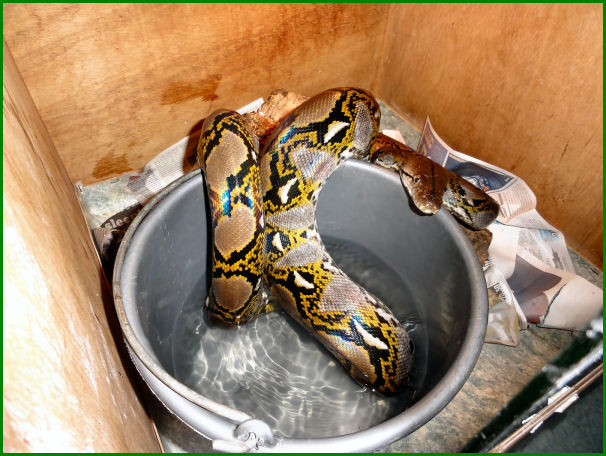
Also some reticulated pythons (Broghammerus reticulatus) are housed in the mentioned way. These are juveniles of the large reticulated pythons that live in the expedition. The only reason why they were bred is to have a young to use for publicity in the media. No other zoo wants them. The oldest was during my internship at least 2 meters long. This snake was always very stressed during the cleaning of its terrarium because it had no place to hide.  This species is somewhat nervous by nature.

Reticulated python (Broghammerus reticulatus)


Also Burmese pythons (Python molurus bivittatus) and Rainbow boas (Epicrates cenchria cenchria) are housed in this way.  Confiscated animals the zoo gets paid for.

Burmese python (Python molurus bivittatus)

Rainbow boas (Epicrates cenchria cenchria)


Some large Boa constrictors (Boa constrictor) of over 2 meters and 10 cm diameter are housed in these small terrariums.

Boa constrictor (Boa constrictor)

Boa constrictor (Boa constrictor)


A number of Madagascar Tree Boas (Sanzinia madagascariensis) are housed in these small terrariums. Some are confiscated animals the zoo gets paid for.

Madagascar Tree Boas (Sanzinia madagascariensis)
 
A male and a female Green Tree Boas (Corallus batesii) are housed in small plastic boxes of about 30 x 40 x 40 cm. These are adult animals. On the picture you see the male. The female is twice as big. 


Male Green Tree Boa (Corallus batesii) What you see is the helve of its "terrarium"