vrijdag 6 januari 2012

Animal cruelty, part 5

A reminder why I place these articles!

The manager of the largest reptile zoo in the Netherlands has often said in public (television, newspapers, etc) that private keepers of reptiles, amphibians and invertebrates do not take care of their animals in the right way. He wants stronger laws and a mandatory animal-registration. He thinks he is holier than the Pope because a number of animals which are his responsibility are mistreated in a terrible way. Often this are animals that were confiscated by the government of the Netherlands. They are the property of the Dutch government and the zoo gets payed well to take care of them.

Also take a look at Animal cruelty 1, Animal cruelty 2 & Animal cruelty 3 & Animal cruelty 4

Sickening treatment of juvenile Green Iguanas

A large group of baby Green Iguanas is housed on the quarantine I mentioned before.
These animals were confiscated by the Dutch government; the import circumstances were not in order. It was a group of 300 Iguana iguana babies (farmbred) of about one month old.
A number of them were already dead when they arrived in the reptile zoo. There also were a number of them that were very weak/dehydrated/etc.
After a month or two there were about 150 babies left.
The Dutch government (in other words: the taxpayers of the Netherlands) pays thousands of euros per month at the reptile zoo management for their care.

Juvenile Green Iguanas (Iguana iguana) in their far too small terrarium

Juvenile Green Iguanas (Iguana iguana) in their far too small terrarium

Juvenile Green Iguanas (Iguana iguana) in their far too small terrarium


Juvenile Green Iguanas (Iguana iguana) in their far too small terrarium

Juvenile Green Iguanas (Iguana iguana) in their far too small terrarium

Juvenile Green Iguanas (Iguana iguana) in their far too small terrarium

Juvenile Green Iguanas (Iguana iguana) in their far too small terrarium

The small Iguanas were housed in terrariums of 60 x 60 x 60 cm. In each terrarium there were 7 to 10 specimen housed.
Instead off keeping these weakened and ill Iguanas in a separate room, they were placed in a number of wooden terrariums (see pictures) that were in a lot of cases attached to terrariums in which other reptiles lived. For example next to Python regius. About the consequences for these Ballpythons I will write another time.

Juvenile Green Iguanas (Iguana iguana) in their far too small terrarium
Every time that their terrarium had to be cleaned (every other day) these animals suffered from a lot af stress. The managers of the reptile zoo cleaned out the terrariums in the early morning, before the lamps were switched on. On this moment of the day they were still "cold" and it was a little easier to work in the small terrariums. Even though the animals were panicked every time because there was no place to hide or to retreat.
Not only this was very stressful for the lizards; also the fact that they were living with that many specimen in such small terrariums was very stressful for them.
These animals were permanently ill (flagellates infections, etc.) and had to be treated often. This did not help much and every now and then animals died. The "experienced" people who took care of them did not seem (or want) to understand that the stress played a big role in this!
One year later there still are large numbers of Iguanas alive.
In the meanwhile a lot of them are larger than their terrarium (which they have to share with 3, 4 or 5 other specimen). The stress factor is still present and is even worse now the lizards are bigger. A terrarium of this size is too small for one Green Iguana and certainly for 4 or 5 specimen!


Ill Green Iguana (Iguana iguana) amongst others, suffering from flagellates


Ill Green Iguana (Iguana iguana) amongst others, suffering from flagellates

The "professional care" for these Iguanas cost the Dutch government thousands and thousands euros. And for that money the animals are not treated very well. In fact, they are mistreated!

The Exotic Amphibians, Reptiles, Turtles, and Crocodilians of Florida


Monograph 1.
Walter E. Meshaka, Jr.
State Museum of Pennsylvania, 300 North Street, Harrisburg, Pennsylvania, 17120, USA,
E-mail: wmeshaka@state.pa.us

Meshaka, W.E., Jr. 2011. A Runaway Train in the Making: The Exotic Amphibians, Reptiles, Turtles, and Crocodilians of Florida. Monograph 1. Herpetological Conservation and Biology 6:1-101.

A great monograph about the exotic amphibians and reptiles in Florida.

INTRODUCTION
 As of 2004, 40 exotic species of herpetofauna occurred in established populations in Florida (Meshaka
et al. 2004a), and two years later, Meshaka (2006)reviewed the inclusion of six more species. Yet anotherspecies appeared as established in 2007. In light of a wealth of new published information since Meshaka et al. (2004a) went to press and a continuing accumulation of new exotic species and colonies of existing exotic species, it became apparent that an update of Meshaka et
al. (2004a) was warranted. Thus, this new edition is both a snapshot in time and a progress report, providing a summary of Florida’s exotic herpetofaunal phenomenon. Its goal remains unchanged: to convey to an audience of budding naturalists, land managers, professional biologists, and those at regulatory institutions what is currently known and unknown about the established ecology and colonization dynamics of each established species. This will better enable interested individuals to understand the colonization process and will provide them useful information with which to make wise management decisions. In a larger context, the geographic distributions of exotic herpetofauna in North America were determined to be so extensive that The Center for North American Herpetology maintains an active update of those species.

Green Iguana (Iguana iguana)

The taxonomic, ecological, and geographic patterns associated with the currently established 47 Floridian species deviates little from those patterns noted by Meshaka et al. (2004a). For example, most of the species are lizards, especially geckos and anoles (Table 1). Most of these species are small, early maturing, fecund, generally insectivorous, nocturnal, and excel in establishing themselves around humans even if they are not limited to human-disturbed situations. 

Tokeh (Gecko gekko)

 The native centers of geographic distribution for most of these species is the New World (n = 28), 15 of which are from the West Indies. Nineteen of the exotic species arrived from the Old World. The Florida distributions of most of these species are centered in the southern part of the
state (Fig. 1 and 2). Exceptions to these patterns exist and sharply test the rule. For example, the Burmese Python (Python bivittatus) is a large carnivore that may require a few years of growth before egglyaying is
possible (pers. obs.). 

Brahminy Blind Snake (Ramphotyphlops braminus)

The Texas Horned Lizard (Phrynosoma cornutum) is firmly established in northern Florida and apparently absent in southern Florida. Further, when compared to 2004, the geographic
distributions for many of these species have exploded and the number of new species has yet to reach a plateau (Fig. 3); an exotic species runaway train, as it were. Indeed, each new exotic population and each new exotic species is a barometer of human failure to be good stewards of a natural legacy for which we are responsible. For better or worse, these are also opportunities to more clearly understand why species succeed or fail and what can be done, if at all, to manage one of the most compelling Florida conservation issue of the new millennium (Meshaka and Babbitt 2005). I hope this current work has revealed these issues and has shed light on the value of understanding colonization processes and making good management decisions in this turbulent part of the world called “the Sunshine
State.”

For more, see the complete monograph


woensdag 4 januari 2012

Atomic Betty on diet

The original article can be found here

Atomic Betty faces the scales

 WHEN Betty hit 135kg, she was put on a strict diet of only a few goats a year.

It was a sign she needed to start watching her weight, so keepers at the Australian Reptile Park in Gosford were pleased to see the reticulated python weighing in at a svelte 137 kg on Wednesday.
Atomic Betty, the longest species of snake in the world and believed to be the biggest in Australia, had staff in hiss-terics as they tried to bag her for her annual weigh in.
It took six reptile keepers half an hour to bag the park's biggest catch and potential man-eater.
When they finally got the 6.5 metre snake to the scales, it was revealed she had put only 2kg since the previous year.

Reptile Keepers struggle to get the python out of its enclosure for weighing.
Picture: Robert Mckell

 Tim Faulkner, the park's operations manager, said it was no mean feat to get Betty, who has the ability to crush a person to death and swallow them whole, out of her glassed enclosure.
"The scary thing is that she has the ability to crush us," Mr Faulkner said at the park in Gosford, on the NSW Central Coast.
"You've got about a second to grab (her head) because as we go down they've got extremely good vision and she is going to strike."
Mr Faulkner said Betty's favourite food was goat.
"She didn't grow by a lot and that's because we actually stopped her from consuming as much food," he said.
"This year she only had about three or four goats as opposed to maybe 10 because she was getting a little bit too round rather than getting longer."
Betty usually swallows a goat in about an hour though it takes up to a week to digest.
She was imported from the US in 2001 and is expected to grow another metre in the next seven years.
The reticulated python is usually found in southeast Asia.
The constrictor is non-venomous but is a man-eater and strong enough to swallow a human whole.

zondag 1 januari 2012

Good news to start the year


Bye, Bye Bitey - Kye Dalton farewells snake that tried to kill him as he played in Port Douglas

by: By Samantha Healy 

The Sunday Mail (QLD), december 31, 2011

 QUEENSLAND toddler Kye Dalton marvelled as the python that tried to kill him was released by a local snake catcher.

The Python, Kyle & his mom

 
With child-like innocence the Port Douglas boy waved at the 4m giant and yelled "bye, bye Bitey" on Thursday.
Just two days earlier, the snake had latched on to the brave two-year-old's left leg and coiled around his little body, attempting to squeeze the life out of him before turning him into a late Christmas dinner.
Kye's mum, Rachael Sullivan, 20, had watched in horror as the python tried to eat her son.
The family's terrifying ordeal with the amethystine python happened just before 8pm on Boxing Day outside their suburban home.
Ms Sullivan was cuddling her eldest son Tyiese, 3, and playing with Kye in the partially enclosed carport adjoining their single-storey unit.
Mum and son were throwing a ball back and forth when it rolled behind her chair and the energetic toddler ran to retrieve it.
"It was like any other night, half an hour of playtime before bed," Ms Sullivan told The Sunday Mail.
"We were throwing a ball to each other and it rolled behind me, so Kye went to pick it up.
"He then let out that horrible scream where you know something is very, very wrong.

The snake is caught and not killed!!

"We were throwing a ball to each other and it rolled behind me, so Kye went to pick it up.
"He then let out that horrible scream where you know something is very, very wrong.
"By the time I got to him, and we are talking a second or two, the snake had latched on to his foot."
Ms Sullivan's neighbours, Scott Tunnie and his fiance Xena Reeves heard the screams and came to help.
"Apparently I just chucked Kye at Scott," Ms Sullivan said. "I said a snake had got him and Scott asked where had he been bitten and I yelled 'he's still being bitten'."
Mr Tunnie grabbed the snake's head and squeezed as hard as he could. He then began unwinding the massive creature from the child's body.
Ms Reeves, a police officer, began first aid as they waited for the paramedic, who fortunately lived in the same street, while Mr Tunnie grappled with the highly agitated snake.
It then turned on him, constricting his left arm and cutting off circulation.
Overcoming her own intense phobia of snakes, Ms Reeves tried to pull the snake off Mr Tunnie's arm while speaking with paramedics on the phone. It took the help of two more neighbours to finally get the snake under control.
Paramedics wrapped Kye's leg and transported the family to Mossman Hospital. But his ordeal wasn't over.
During the trip, Kye passed out, prompting fears the snake may have been venomous.
Ms Sullivan said she asked staff to swab for venom, but was told they didn't have the authority to do that.

Kyle waving his "friend" goodbye

"They told me they didn't have the authority to do any swab tests any more, which is strange because we get a lot of snakes up here," she said.
Mossman Hospital medical services director Dr Patrick O'Neill said Kye received appropriate treatment based on the clinicians' knowledge and following a full assessment.
Dr O'Neill said an anti-venom kit was available but was not used because a description of the snake was given to doctors and Kye showed no signs of envenomation.
"This patient received the right care, at the right time," Dr O'Neill said.
Kye was then transported to Cairns Base Hospital but he began throwing up, his heart rate dropped and he stopped breathing during the one-hour trip. He was revived using oxygen and was wrapped in a heat blanket.
Cairns doctors took swabs of Kye's wounds and did X-rays to ensure the python's vice-like grip hadn't broken any ribs. Both tests came back negative. Kye was discharged the next day, nursing four bite marks and bruising on his lower left leg.
"We didn't spend that first night at home," Ms Sullivan said. "We stopped in to get clothes but the kids wouldn't get out of the car, so we stayed at my mum's."
On Thursday, the family confronted their fear, coming face to face with the massive creature during a meeting with Port Douglas snake catcher Dean O'Donohue.
Mr O'Donohue had removed the python, now dubbed 'Bitey' - the biggest and most aggressive he's seen this season.
"At 3.5m to 4m, it is long but not a particularly thick snake, so it was probably looking for food," Mr O'Donohue said.
Bitey has now been released into rainforest.

donderdag 29 december 2011

Endangered frogs given new life in south Western Australia


HIRTY-ONE captive-bred endangered sunset frogs and 251 tadpoles have been translocated to the South-West in a bid to save the species from extinction. 
 
Department of Environment and Conservation officials said most of the amphibians were bred at Perth Zoo and moved to a private property in the Mt Frankland area.
There are only 30 known populations of the sunset frog left in the wild and the rare creatures survive in a tiny pocket of the South-West near Walpole and Nornalup.  They currently live in poorly drained peat-based swamps at the headwaters of drainage systems.

Climate change and feral animals, particularly pigs, have played a large role in the frogs' demise, experts say.

DEC threatened fauna ark project officer Manda Page said the sunset frog is also at risk of extinction because of its reliance on habitat that is no longer in abundance.

Dozens of sunset frogs have been sent to the South-West in bid 
to save the species from extinction.  
Picture credit: Department of Environment and Conservation Source: PerthNow


"The release site for the frogs and tadpoles was chosen because it provides suitable habitat and extends the known range of the species," Dr Page said.

“If they breed successfully here, this will hopefully provide insurance against the species being wiped out by a devastating local event such as a large-scale intense bushfire that could destroy the frog’s peat swamp habitat."

All of the tadpoles and most of the adult frogs were reared at Perth Zoo.


 “The owners of the property on which the animals were released have fenced the site and are taking a lead role in protecting and monitoring the frogs," Dr Page said.

“Staff from DEC’s Walpole office will be working with the owners to help them protect the habitat and monitor the survival and breeding behaviour of the frogs. This will hopefully enable us to assess if the translocation has been successful."

The translocation was funded by the State Natural Resource Management program.

--------------------------------------------------------------------------------------------


woensdag 28 december 2011

$11,000 fines and costs for smuggling native reptiles

The original article can be found here

A 46-year-old man from New South Wales has been fined $2000 and ordered to pay $9735 in court costs after being convicted of illegally possessing 29 native reptiles.
Neil Andrew Simpson, 46, was apprehended at Perth Airport on April 25 last year after officers from the Department of Environment and Conservation (DEC) intercepted the illegal consignment of reptiles which had been flown to Perth from Newman and were scheduled to be put on a flight to Sydney.

The consignment included a death adder, geckos of various species, dragon lizards, a blue-tongue lizard and pythons. The reptiles were concealed in plastic containers.

Simpson was convicted this week in the Perth Central Law Courts following a two-day trial.

PROTECTED:
Rikki James Piromalli pleaded guilty to possessing
and keeping a South West carpet python
in captivity without authority.
Picture: DEC
Source: PerthNow

There was also a second conviction in the Perth Magistrates Court this week, when a 33-year-old Nollamara man was fined a total of $600 and ordered to pay $110 in court costs for illegally keeping a 2m south-west carpet python at his home.

Rikki James Piromalli pleaded guilty to possessing and keeping the carpet python in captivity without authority. The snake is a specially protected species in WA.

DEC prosecutions coordinator Gail Ritchie said he was charged following a search warrant executed by WA Police on his property in January this year.

Ms Ritchie said wildlife smuggling was an ongoing problem and removing protected fauna from the wild had serious implications.

“In the Piromalli case, the carpet python cannot be released in a different location from where it was taken due to the possible effects on the local gene pool of this species. It also poses a risk of introducing disease to wild populations, but we will ensure that it is appropriately cared for,” she said.

“Wild reptiles should be allowed to remain in their natural habitat. DEC takes the unlawful possession of protected reptiles and reptile trafficking very seriously, and we will continue to investigate these matters.”

Under the WA Wildlife Conservation Act the maximum penalty for taking or possessing and keeping specially protected fauna is $4000.

Anyone who has information about the illegal removal of reptiles or notices any suspicious activity suggesting that reptiles are being illegally moved should call DEC's Wildcare hotline 9474 9055.


The cutest reptile you're goanna see


UNTIL now, very few of us would have seen this species of reptile - the Rosenberg's goanna. 
 
Once common in southern Australia, it is classified in many areas as vulnerable because of land-clearing and predators such as feral cats.

Adelaide Zoo has successfully bred the Rosenberg's goanna for the first time.
Picture: Jo-anna Robinson


For the first time, the Adelaide Zoo has successfully bred the goanna, which has distinctive orange/brown colouring and grows up to one metre. Eventually, it's hoped the breeding program will help boost their numbers in South Australia, particularly in the Mt Lofty Ranges where they are most prevalent.

The goannas are endangered
in the Mt Lofty region.
 "Having our own young born here means we will have the opportunity to monitor their development for the first time," the zoo's senior reptile keeper, Byron Manning, said.

dinsdag 27 december 2011

Animal cruelty, part 4

A reminder why I place these articles!

The manager of the largest reptile zoo in the Netherlands has often said in public (television, newspapers, etc) that private keepers of reptiles, amphibians and invertebrates do not take care of their animals in the right way. He wants stronger laws and a mandatory animal-registration. He thinks he is holier than the Pope because a number of animals which are his responsibility are mistreated in a terrible way. Often this are animals that were confiscated by the government of the Netherlands. They are the property of the Dutch government and the zoo gets payed well to take care of them.

Also take a look at Animal cruelty 1, Animal cruelty 2 & Animal cruelty 3


Suffering Green Iguanas


In the exposition of the reptile zoo there are two groups of Green Iguanas (Iguana iguana). In the group that lived on the ground floor there was a female Green Iguana that was continuously was molested by a male Green Iguana. Thanks to this she always had a number of wounds that would not heal because the male kept biting her. It goes without saying that the female iguana was always very stressed and afraid. The people who had to clean out the terrarium wanted to place her in a large terrarium on the quarantine so she could get rest and her wounds would heal.
The two managers of the reptile zoo did not allow this!

Lots of visitors were shocked when they saw the male Iguana bite the wounded female. Much too late she eventually was placed in a (too) small terrarium (100 x 50 x 50 cm) on the quarantine. Too small because she was not able to hide when the terrarium was cleaned. This gave her a lot of stress again. In this terrarium she perished miserably; this process of dying lasted for many months I heard of the people who had to care for her. I already had left the zoo at that moment.

This Green Iguana should have been euthanized! Her wounds were chronically inflamed and did not heal. She became blind, would hardly eat or drink anything and there is no doubt in my mind that her internal organs also suffered a lot of the biting.

The top of the head of the female Green Iguana
that was continuously bitten by a male Green Iguana


The back of the female Green Iguana
that was continuously bitten by a male Green Iguana

In the past there also were other Green Iguanas at the quarantine that were very ill or disabled. These were not euthanized, but had to suffer during a long period before they died. This is a severe form of animal cruelty and very unprofessional of the responsible managers. Let the pictures speak for themselves.

This Green Iguana suffered of a severe form of rachitis
(not caused by the people of the reptile zoo).
It was kept alive during a longer period.
He was hardly able to move himself

A chronically ill Green Iguana that suffered for many months

A chronically ill Green Iguana that suffered for many months

In this setting the Green Iguana had to live during the awful last months of her life

zondag 25 december 2011

Belo Monte Dam and Hunters Endanger Amazon Turtles


By: Mario Osava - The Guatemala Times


Local authorities, former hunters and environmentalists have joined forces to ensure the reproduction of Amazon turtles in Brazil’s Lower Xingú River. But now they face the threat of the Belo Monte hydro dam being built 40 km upstream.

BAJO XINGÚ, Brazil, Nov 21 (Tierramérica).- Brazilian Luiz Cardoso da Costa was horrified as he watched the Amazonian manatee, a large docile beast, bleeding out from the knife wound he had dealt it, yet greedily gulping down grasses as if eating could somehow stave off death.

 He was not expecting such an agonizingly drawn-out death. And it led him to swear off the hunting of these aquatic mammals, also known as seacows, which can reach sizes of up to half a ton of meat, fat and hide, which fetch a high price on the black market.

He had decided to use a knife and aim for the animal’s heart, because the traditional method of killing Amazonian manatees (Trichechus inunguis) seemed too cruel: sticking rods into their nostrils so that they die of asphyxiation.

But what provoked Da Costa, formerly a "great predator", to give up all forms of hunting forever was witnessing some 800 turtles being loaded onto a boat destined for Manaus, the central metropolis of the Amazon region, in northwestern Brazil. On that particular occasion, 13 years ago, he himself had sold "only around 20" of those 800, but the sight of such a huge number of dead turtles together shook him to the core.
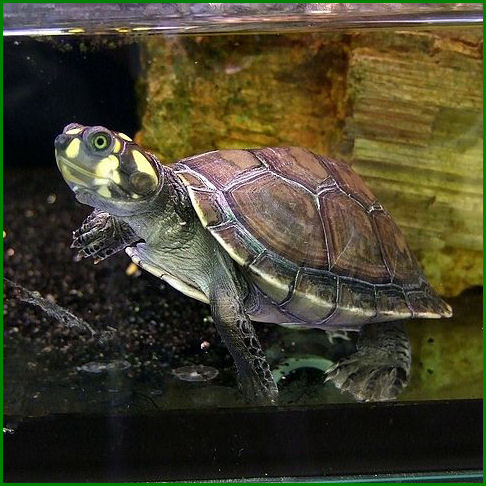
Yellow Spotted River Turtle _ Podocnemis unifilis

His conversion was dramatic. Today he is the heart and soul of environmental protection in Tabuleiro do Embaubal, a group of more than 100 islands in the final stretch of the Xingú River, in the eastern Amazon, whose beaches are the principal known remaining breeding grounds of Amazon turtles.

Thousands of females gather here in September and October, especially on the beach in Juncal. They dig holes in the sand to serve as nests, lay their eggs, cover them up with sand, and then return to the river.

The spectacle of sand flying through the air as multitudes of large turtles dig their nests and lay their eggs could be a major tourist attraction some day, believes Saloma Mendes de Oliveira, secretary of the environment in the municipality of Senador José Porfírio, which includes the Tabuleiro do Embaubal archipelago. As well as a source of revenues, this would also promote the commitment of local communities to the preservation of nature, she added.


For now, the large gatherings of turtles makes them especially vulnerable to hunters, who continue to take advantage of the high prices for turtle meat and eggs, despite the fact that their capture is an environmental crime punished with heavy fines and even prison sentences in some cases. 

Podocnemis unifilis


This is why efforts are being stepped up to monitor the beaches during the "summer" or low-water period between June and November. Since September, Da Costa has been jointed by another 20 rangers.

These are people hired by a company called Biota, created through an agreement between the municipal government of Senador José Porfírio and Norte Energia, the consortium awarded the contract to build the Belo Monte hydroelectric power plant. Norte Energia is responsible for monitoring and mitigating the impacts of the two dams it will build as part of the project.

A good deal of controversy surrounds the potential effects of this energy mega project in the Amazon region, whose total capacity of 11,233 megawatts will be limited to 40% effective capacity, on average, due to the sharp variation in the flow of the Xingú River.

Norte Energia "hasn’t explained anything to us," said Da Costa. His fear is that the river’s water levels will drop, leading to drier "winters" or high-water periods on the Embaubal islands. If the wetlands that are usually flooded during the high-water period dry up as a consequence, this would deprive the turtles of their source of plant food, which means they would be thinner and lay fewer eggs, he explained.

However, this scenario is unlikely, according to Juarez Pezzuti da Silva, a biologist from the Federal University of Pará who is coordinating studies of reptiles in the Xingú River basin.

The flow of the Lower Xingú, the 220-km stretch of the Xingú River between Belo Monte and its mouth, is determined by the Amazon River, which receives its waters along with those of the more than 1,000 rivers in the Amazon Basin.

The Amazon River, vastly larger and faster flowing than its tributary, operates as a barrier to draining. This is why the water level of the Xingú would only drop lower than normal if the same thing happened in the Amazon River. In addition, both rivers are influenced by the tides of the Atlantic Ocean, despite the fact that it is 400 km away.

This is exactly what worries Oliveira: that the slower-flowing waters of the Lower Xingú "will become more acidic" by accumulating more decomposed organic matter, "affecting more susceptible species and reducing local biodiversity."

Norte Energia denies the possibility of such an impact, but its conclusions are not based on any serious foundations, she maintained.

The consortium only recognizes an "indirect influence" of the Belo Monte project on areas that will not be flooded, but they will suffer equally serious damage as the Volta Grande, the rocky 100-km stretch of river whose waters will be partially diverted to feed one of the Belo Monte dams, said Oliveira.

The dam will retain sediments that are needed to maintain the beaches of the Embaubal islands, whose height is crucial for the successful reproduction of Amazon turtles and other species, noted Pezzuti.

The greatest losses of eggs before they are hatched are due to increases in the river’s water level caused by unusually strong rains.

But these are unpredictable and uncontrollable enemies for rangers like Da Costa, who is responsible for preventing human and natural predators from endangering the fauna of the Tabuleiro do Embaubal.

Peasant farmer Manoel Nader witnessed the turtles laying their eggs on the beaches of Embaubal when he joined the group of rangers. “It was incredibly moving. I had never had the chance to see it before," he said, despite having lived almost all of his 48 years in the municipality.

But Nader confesses that, like a number of his colleagues, he had "fished" a few turtles in the past, for his own consumption, despite the prohibition. Now, however, he is committed to his mission to protect them. Besides, he added, "I prefer beef."


Podocnemis unifulis

The main problem is not the local fishermen, who are known and unarmed, capture only a small number of animals to eat themselves, and could be persuaded to stop, said Da Costa. The real threat is posed by traders "from outside" who supply turtles to big cities like Manaus and Belém. The only way to stop them is through police enforcement, he stressed.

The rangers in Embaubal are civilians, employed by Biota or the municipal government, like Da Costa, and have no law enforcement powers. The Brazilian Environmental Institute (IBAMA), which has this authority, transferred its responsibilities in the archipelago to a private foundation, which gave up the work two and a half years ago.

This left Da Costa as a solitary defender of Embaubal, often without the boats or fuel needed to travel among the islands, and sometimes a powerless witness to the capture of huge numbers of turtles.

He has devoted ten of his 47 years to his mission of protecting the turtles. He lives in the "Base", a large wooden house with an observation post that allows him to monitor Juncal beach, 600 meters away, during the daylight hours. He only rarely visits his family, a wife and six children who live in the city. He earns very little and has received numerous death threats. But he feels gratified.

zaterdag 24 december 2011

Frogs’ Songs Attract Females, and Predators


Male túngara frogs (Engystomops pustulosusgather) in shallow pools of water at night and let out long mating calls. Females visit these pools, listen to a few calls and then quickly pick mates. It’s a bit like speed dating.

A male call consists of a whine followed by a series of grunts, or “chucks.” New research suggests that females judge males on these chucks — not the absolute number, but the ratio of one frog’s chucks to another.
During the study in Panama, many female frogs seemed to prefer two chucks over a single chuck. But most did not show a preference between three chucks and two chucks.
It’s a concept humans can relate to, said Karin Akre, an evolutionary biologist at the University of Texas at Austin who led the research.

The call of a male túngara frog consists of a whine and grunting.


“If you have a pile of three oranges and four oranges, it’s pretty easy to see that one has more,” she said. “But it’s harder to tell the difference between 50 oranges versus 60 oranges, even though the absolute difference is greater.”
The frogs are not alone at night; also lurking nearby are bats that prey on the frogs.
Surprisingly, the researchers found that the bats use the same strategy as female frogs when selecting prey to single out.
Like female frogs, they are drawn to males emitting more chucks, and make their determinations based on the ratio, rather than the absolute difference.
“They show, really, the exact same preference,” Dr. Akre said.
Given the different auditory systems of the two species(one is a mammal and one is an amphibian), “it’s surprising and interesting that they share this cognitive ability,” she said.
The study appears in the current issue of the journal Science.


vrijdag 23 december 2011

Most of India's amphibians may go extinct


By:


NEW DELHI: To discover a new species is a huge honour for a biologist. By that yardstick, the achievements of Dr Sathyabhama Das Biju, an amphibian biologist at Delhi University, are staggering. He has discovered 42 species and is in the process of describing another 28, six new genera and one family - all of frogs.
Meet India's Frog Man, the champion of our amphibian diversity. This week, The Economist magazine featured him on its cover, a rare recognition for an Indian scientist. But for Biju, being in the limelight is an opportunity to make people aware of our vanishing wealth - 66% of Indian amphibians are under the threat of extinction, and if these little creatures vanish, a major ecological imbalance would follow.
"Amphibians were the first land animals and have a 350-million-year history. They are an environmental barometer and we can analyse the quality of our environment by studying them. We cannot imagine life without frogs. If there are no frogs, it would not be possible to grow anything in our fields," he says.


Biju, who works in the Systematics Lab of DU's Environmental Studies department, has been spending seven months a year in the forests of the Northeast and the Western Ghats for the past two decades. It's with this experience that he says the 'dream forest' cover of the Northeast will be lost forever in 20 years' time if urgent interventions are not made.
The scientist then makes a staggering claim: "India is yet to identify 50% of its flora and fauna." Many species of animals will become extinct, he says, without our even knowing they exist.
"For instance, 63 out of 350 amphibian species are no longer found. Amphibian conservation is less about money and more about rapid identification and management and creation of wetland and marshy areas. But we need to do this on a priority," he says. Biju is at present working on 28 new species of frogs which are yet to be described.
The neglect of small species stems from the way we look at wildlife, he says. "In India, when we say wildlife, we usually mean only tigers and elephants. This is a colonial way of looking at the importance of wildlife. But in the context of global warming and the biodiversity crisis, every specie is important for our survival," says he.
Winner of the $ 25,000 Sabin Award for 2008 given by The International Union for Conservation of Nature and Natural Resources (IUCN) for his work on amphibian conservation and research and Earth hero Sanctuary Asia Wildlife Service Award 2011, Biju's central concern is the "tragedy of nameless extinction" of amphibians in India.


"We in India don't know 50% of our flora and fauna. Even small countries like Sri Lanka and Nepal have a list of the plants and animals found in their country. The tragedy is, we cannot recover destroyed biodiversity. In India, biodiversity and conservation is not in our agenda. We are just focused on GDP and profit. Environmental clearance is a mockery. If a green patch doesn't have elephants or tigers, it can be cleared for concretization," said Biju.
Biju, who is now expanding his scope of scientific research on frogs to central India, said that the Northeast is one of the richest regions in flora and fauna. "In India, the Northeast and Western Ghats are the best places for amphibians. But Northeast India's forests are now being ruthlessly destroyed primarily for jhoom cultivation (agriculture practiced by tribal groups), among other reasons," says he.
Biju and his team are currently working on a comprehensive book on importance of amphibians and its conservation.


donderdag 22 december 2011

Snakebite: Experts Seek New Emphasis on Quiet Killer


Papers arguing for new emphasis on snakebite were presented last week at the annual meeting of the American Society of Tropical Medicine and Hygiene.
Officially, the W.H.O. estimates that snakebites kill between 20,000 and 94,000 people a year. Some experts consider this estimate too low, because many deaths of peasant farmers and fishermen go unreported. Snakebites also cause up to 400,000 amputations yearly. 

Cobra (Rod Patterson/Gallo Images via Getty)


Few neglected diseases do so much damage. Even cholera has not officially killed 25,000 since 1973. Cases surge rapidly, as they did in Haiti in 2010, but can be rapidly contained with oral and intravenous rehydration; only about 6,000 have died in Haiti. The W.H.O. estimates there are 120,000 cholera deaths a year worldwide, but normally only about 4,000 are reported.
Most snakebite victims see local healers who apply tourniquets, slice the wounds to suck them, or apply “snake stones.”
Victims need to be rushed to hospitals for antivenom and often must be put on respirators or dialysis. One Nepalese program used volunteer motorcyclists to take victims to a clinic; death rates dropped by 95 percent after the program was implemented.
Cheaper, safer antivenoms are needed. Antivenom is usually made by “milking” snakes, injecting a horse or sheep, and harvesting antibodies; however, the process is expensive, and the product can cause severe allergic reactions.


woensdag 21 december 2011

Animal cruelty, part 3

A reminder why I place these articles!

The manager of the largest reptile zoo in the Netherlands has often said in public (television, newspapers, etc) that private keepers of reptiles, amphibians and invertebrates do not take care of their animals in the right way. He wants stronger laws and a mandatory animal-registration. He thinks he is holier than the Pope because a number of animals which are his responsibility are mistreated in a terrible way. Often this are animals that were confiscated by the government of the Netherlands. They are the property of the Dutch government and the zoo gets payed well to take care of them.

Poor care for Leopard geckos

On the same quarantine that I mentioned before (Animal cruelty 1 & Animal cruelty 2) live some Leopardgeckos (Eublepharus macularius) that are confiscated by the Dutch government. The management of the reptile zoo takes care of them and gets paid for that. I was told that they get around 1 euro per animal per day for the care. That is around 365 euro per animal per year!

What care do these geckos get for this money?

These leopard geckos are housed in very small faunariums with the following measurements: 23 x 15,5 x 17 cm. The leopard geckos are 13 to 15 cm long!! They can hardly move. These animals also do not get extra heating and illumination, so their ambient temperature is around 24 degrees C.
These faunariums are too small to contain a hiding place with a humid substance. This is necessary for Leopard geckos! Thanks to that (and insufficient food) their toes and fingers die and will fall of.
A few times per week they are fed. They get 1 or 2 crickets (crickets cost money!) supplemented with 10 to 20 mealworms.
Faunarium

Leopard gecko


Leopard gecko. What you see is the whole enclosure in which it has to live.

Leopard gecko with dying fingers


Leopard gecko with dying fingers


Leopard geckos. What you see is the whole enclosure in which they have to live.


There are also other small, confiscated lizardspecies housed and cared for in the same way for the same financial compensation. For example Lacerta virdis, Mabuya multifasciata, Gekko gecko and Agama agama. These species need to be housed in large terrariums with a heath lamp. They all are very stressed in these small faunariums.

Agama agama, male in a very small enclosure

Agama agama, female. What you see is half the enclosure in which it has to live.

Strangely enough there also were some Leopard geckos on the same quarantine that were favorites of one of the management members. These were housed in a terrarium with a heath lamp. This animal enclosure was around 100 x 50 x 50 cm. 

In this reptile zoo there is clearly a double standard and the confiscated animals draw the shortest straw. You would expect they get the best care possible, since the Dutch government pays the zoo many hundreds of euros to do so.

maandag 19 december 2011

Snakes’ Feat May Inspire Heart Drugs


Equally remarkable is what happens inside the python as it digests its prey. Within a day, its internal organs can double in size. Metabolic rate and production of insulin and lipids soar.
Then, like an accordion, the python’s organs return to normal size in just a few days. Metabolism slows. Then the snake can fast for months, even a year, without losing muscle mass or showing any ill effects, ready to ambush new prey.
How this process happens so rapidly is a biological mystery with important implications for human health, particularly when it comes to heart failure. Now scientists at the University of Colorado are reporting that they have partly solved it.
In a paper in the current issue of Science, they report that a gorging python expands its heart by enlarging existing cells — a process called hypertrophy — and not by creating new ones. (It is not known whether snakes get heart disease.)

A second finding is that a specific combination of three fatty acids produces enlargement of a python’s heart, intestines, liver and kidneys. Injections of the combination produce similar growth in the heart of a mouse.


A giant python swallows an alligator in Everglades National Park, Fla.

Understanding such exaggerated variations, the researchers say, could help them develop novel ways to delay, prevent, treat or even reverse various hereditary and acquired human diseases.
Substances from other reptiles have been used to develop drugs; for example, the diabetes drug Byetta is derived from a hormone found in Gila monster saliva. And the day may come when doctors literally prescribe snake oil for heart disease.
“Heart failure is the goal” of the python research, said Leslie A. Leinwand, a Howard Hughes Medical Institute professor at the University of Colorado and a senior member of the research team. She added that the findings might also lead to treatments to prevent sudden death in young athletes, as well as ailments like diabetes, high blood pressure and obesity.
A gorging python produces an opaque milky plasma composed of fatty acids and other lipids in amounts that would damage a human heart, Dr. Leinwand said. Trigylcerides, the main components of natural fats and oils, zoomed to 50 times the fasting rate.

Dr. Leinwand had been fascinated by a journal article by Stephen M. Secor and Jared Diamond urging other scientists to explore extremes of lifestyles among wild animals. The python research in Boulder began in 2005, when Cecilia A. Riquelme, who had earned a Ph.D. in cell biology in her native Chile, sought a fellowship in Dr. Leinwand’s laboratory.

An expert in the molecular workings of the heart, Dr. Leinwand knew little such research had been done on pythons. There are structural differences — a python heart has three chambers, a human heart four. Yet she thought experiments in comparative biology might advance human heart research.
Adult pythons can grow as long as 25 feet and as thick as telephone poles, far too large for her laboratory. So she bought a supply of five-footers and asked Dr. Riquelme, “How would you feel about working with pythons?”
Pythons are not venomous; still, she feared being bitten. But the challenge was too tempting to pass up, and after a harmless bite she overcame her fear.
She started by observing how the python’s organs grew while the intact prey was in the stomach. The organs regressed in size over about two weeks.
Using chemical stains they developed to measure cell size and the number of nuclei, the investigators determined that the heart expansion was from hypertrophy, not formation of new cells.

Hypertrophy of the human heart occurs in two types. One, from ailments like high blood pressure and heart attacks, is a leading predictor of death. The second type is beneficial and occurs from exercise in conditioned athletes.
The Colorado scientists found that the enlargement of a python’s heart is analogous to the growth seen in the heart of a human athlete. Among their goals is to better understand how plasma components instruct individual cells to develop into the beneficial ones among athletes or bad ones in disease.
After a year, Dr. Riquelme determined that she could enlarge the heart of a starved python by injecting blood from a feasting one. She then proposed adding the blood’s straw-colored plasma to rat heart cells to determine whether it had the same effect.
Dr. Leinwand doubted the experiment would work. But it did, repeatedly, and Dr. Riquelme said her colleague “jumped up and down” with excitement. Dr. Leinwand called it “the critical finding that motivated us to translate the python biology into mammals.”
Still, a major mystery remained: What component of the python plasma caused the cells to enlarge?

Dr. Riquelme used gas chromatography and additional techniques to analyze the proteins, lipids and other components of python plasma in fed and starving pythons.
Several pieces of evidence pointed to fatty acids, which are important in the body’s energy production and metabolism. In additional experiments, Dr. Riquelme and other members of the Colorado team found that only the specific combination of three fatty acids from a sated python produced the same hypertrophy when injected into a fasting one. The three fatty acids that enlarge the python’s cells (myristic, palmitic and palmitoleic) occur in proportionately higher amounts in pythons than in humans. Injections of one fatty acid, or a combination of two, did not produce hypertrophy.  

Leslie A. Leinwand
Another mystery was what protected the python heart from the toxic effects of huge amounts of the lipids. Further research determined that the protective substance was an enzyme, SOD (for superoxide dismutase), an antioxidant that defends cells exposed to oxygen.
Eventually Dr. Riquelme returned with her family to Chile (though their departure was delayed for months by the giant earthquake in February 2010), and it was left to her colleagues in Colorado to carry out additional experiments. In one, blood plasma from bloated pythons was injected into live mice. Again, surprisingly, mouse heart cells enlarged as they would in a well-conditioned athlete.
Along the way, the Colorado team asked Dr. Secor, now at the University of Alabama in Tuscaloosa, to join in the research. He is an author of the new paper in Science.
The findings leave a number of mysteries still open. What causes the organs to shrink to their fasting size? How would such findings apply to the death of human cells? And will repeated injections of the fatty acid combination safely lead to sustained increase in organ size?
Dr. Leinwand said she carried out the python research with support from federal and Colorado taxpayers and the American Heart Association. But the federal National Institutes of Health rejected her requests for direct financing, calling the relationship between reptiles and human heart disease too remote. In 2007, Dr. Leinwand became a founder of the Hiberna Corporation of Boulder to develop drugs derived from the study of exaggerated variations in animal metabolism. The company helped pay for some of the research.